Car Profiles
Cars
How each car behaves on track — and why — with the setup to match.
Drive
Balance
Sort
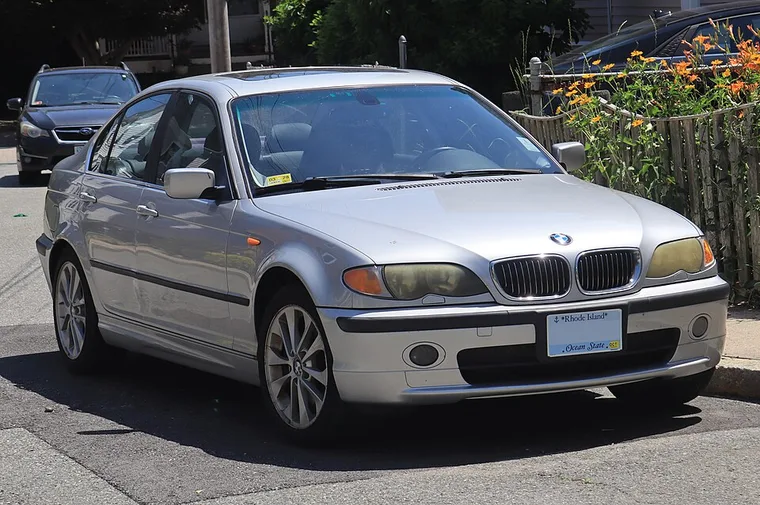 BMW 3 Series (E46)
Bravion
A near-50/50 rear-drive sports saloon that rotates willingly — quick and rewarding, but happy to swing the tail on both power and lift.RWD front-enginemid weight ≈1,450 kgbreakaway: fast50% front / 50% rear · oversteersWhy demanding- A true 50/50 rear-driver — it rotates willingly and is prone to both power and lift-off oversteer.
- Rev-happy: back off or add throttle mid-corner and the tail answers quickly.
- A point-and-shoot exit car — calm the rear in setup rather than adding more rotation.
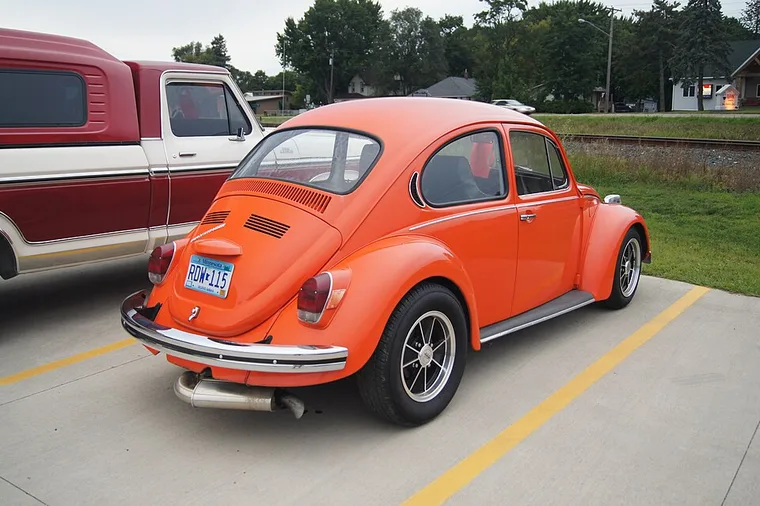 1971 VW Beetle
Buggy
A light rear-engined Beetle with its weight over the back axle — darty and quick to rotate, with a pendulum tail that swings wide off-throttle.RWD rear-enginelight ≈934 kgshort wheelbasebreakaway: sudden40% front / 60% rear · oversteersWhy demanding- Weight sits behind the rear axle (40/60) — once the tail lets go, the mass keeps swinging like a pendulum.
- Light (≈934 kg) and short — low inertia, so it changes direction the instant you move the wheel.
- Rear-engine lift-off oversteer: back off mid-corner and the tail steps out on its own, with little warning.
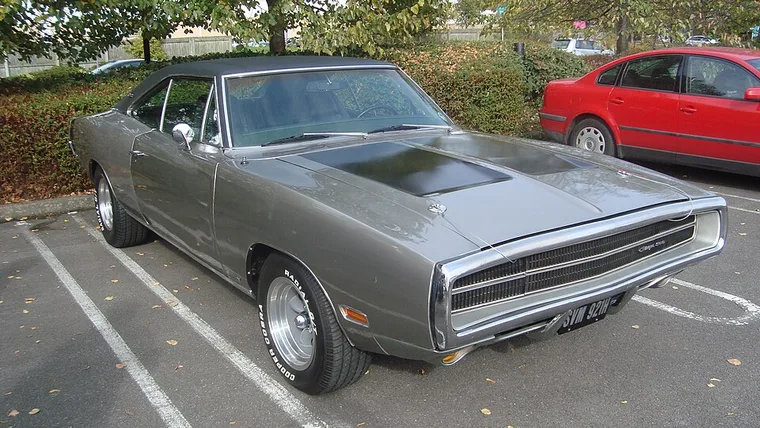 1970 Dodge Charger
Bullet
A long, heavy long-wheelbase muscle car — the most stable at speed and the least agile, with slides that build momentum.RWD front-engineheavy ≈1,795 kglong wheelbasebreakaway: progressive56% front / 44% rear · understeersWhy forgiving- Long, heavy and long-wheelbase — the best high-speed stability in the roster and the worst agility.
- Slow to rotate: slides build momentum and take distance to gather, so steer it with the throttle.
- Buy rotation in setup for the slow corners; on fast tracks its stability is a gift.
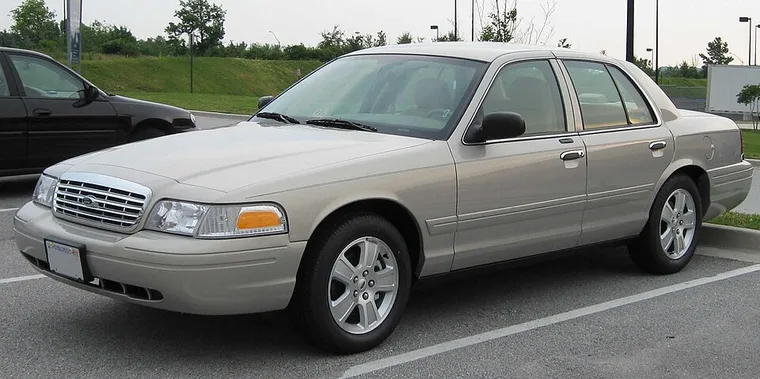 2010 Ford Crown Victoria
Cardinal
The heaviest car in the roster — a front-biased full-size sedan that understeers hard but survives contact and runs a huge top speed.RWD front-enginevery heavy ≈1,937 kglong wheelbasebreakaway: progressive55% front / 45% rear · understeersWhy forgiving- The heaviest car in the roster (≈1,937 kg) — a front-biased understeer tank with the lowest cornering grip.
- That mass is huge inertia: it changes attitude slowly and pushes wide with plenty of warning.
- High top speed and strength — the ultimate high-speed tank; brake early for the tight stuff.
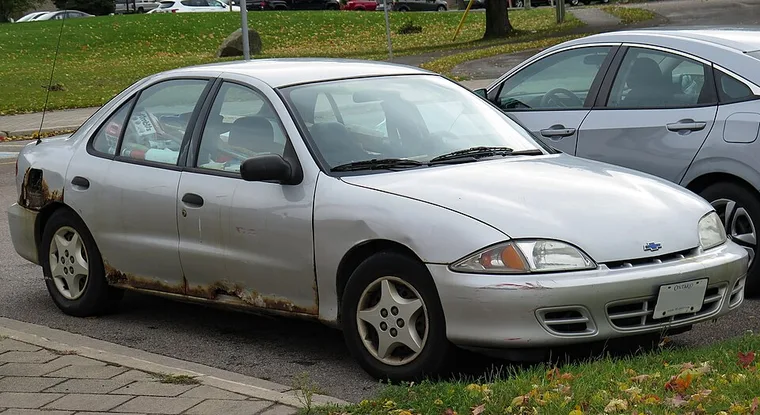 2002 Chevrolet Cavalier
Crusader
A front-heavy front-drive economy coupe — a textbook FWD car that understeers on power unless you rotate it on entry.FWDmid weight ≈1,270 kgbreakaway: progressive62% front / 38% rear · understeersWhy forgiving- Front-drive and very nose-heavy at 62/38 — adding power just makes it push, the safest failure there is.
- Understeer self-corrects: ease off the throttle and the nose tucks back into the corner.
- A textbook FWD car — rotate it on entry, then protect the loaded front on the way out.
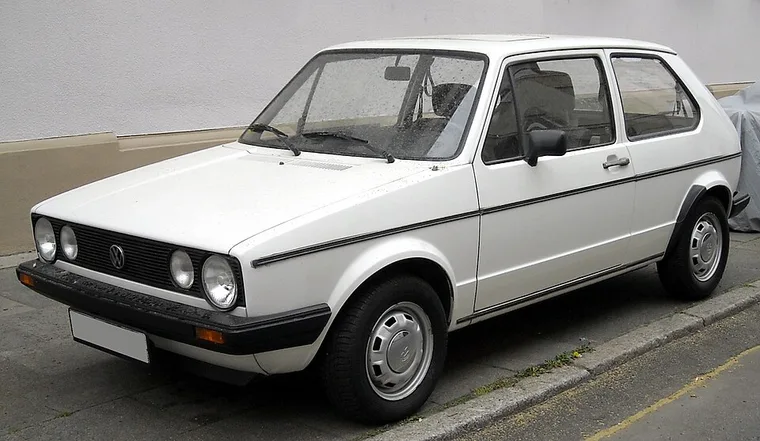 1980 VW Golf Mk1
Gizmo
A light front-drive hatchback — nimble and quick to change direction, but it fights you under power.FWDlight ≈850 kgshort wheelbasebreakaway: fast61% front / 39% rear · understeersWhy neutral- Light and short — nimble and quick to change direction, but that also makes it lively.
- Front-heavy 61/39 understeers under power, yet it has pronounced lift-off oversteer you can use to rotate.
- Weak power-down out of slow corners — carry your speed rather than relying on traction off the apex.
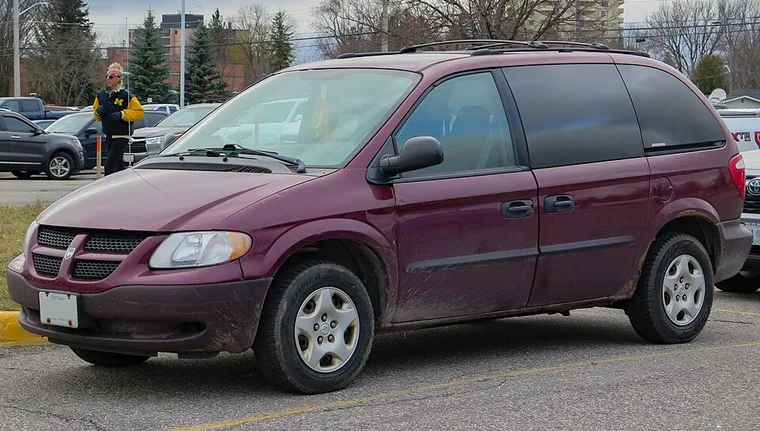 2001 Dodge Caravan (minivan)
Grandstar
A heavy, tall front-drive minivan — strong understeer and a high centre of gravity make it roll-prone, but its mass is a ramming asset.FWDvery heavy ≈1,860 kgbreakaway: progressive59% front / 41% rear · understeersWhy forgiving- A heavy, very nose-heavy minivan — strong, predictable understeer under power.
- But a high centre of gravity makes it roll-prone: it understeers safely yet can tip if you fling it.
- Stiffen anti-roll and lower it where allowed; use the mass as a ramming asset, stability over agility.
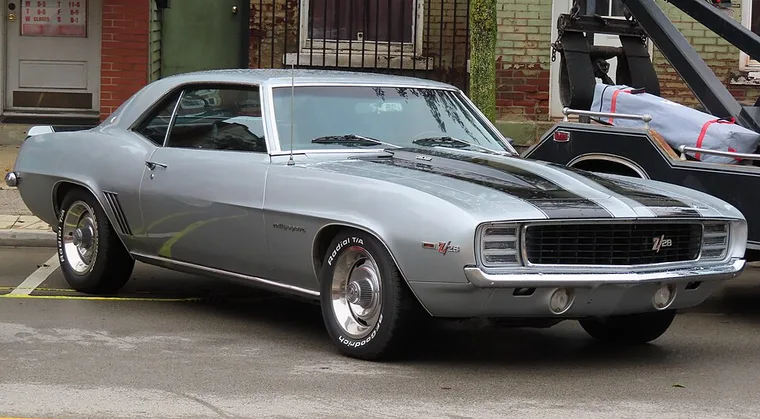 1969 Chevrolet Camaro
Hurricane
The torque-forward muscle cousin — lighter and nimbler than the RoadSlayer, but eager to oversteer on power and short on revs.RWD front-enginemid weight ≈1,490 kgbreakaway: moderate54% front / 46% rear · oversteersWhy neutral- Near-balanced 54/46 with a torque-rich V8 — power oversteer arrives the instant you get on the throttle.
- A low redline means it runs out of revs early, so exit grip sets your pace, not top speed.
- The mild entry push gives a little warning before the rear steps out.
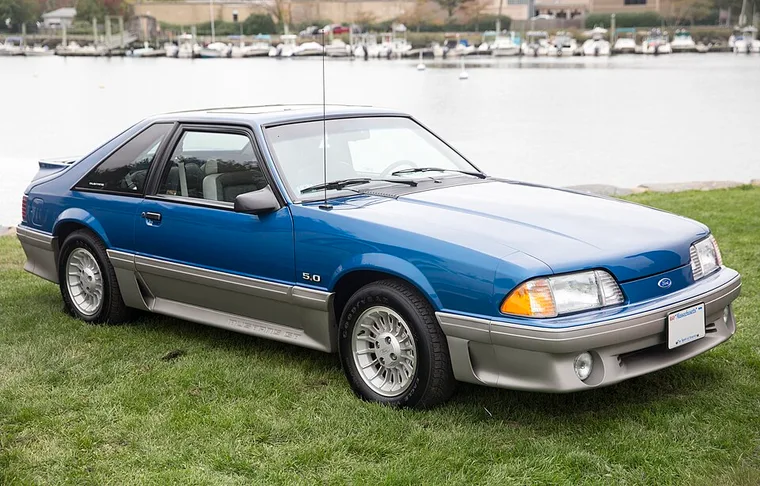 Fox Body Ford Mustang
Jackal
The lightest, twitchiest muscle car — a short-wheelbase live-axle coupe that snaps into oversteer on lift and hops over bumps.RWD front-enginemid weight ≈1,400 kgshort wheelbasebreakaway: sudden57% front / 43% rear · oversteersWhy demanding- The lightest, twitchiest muscle car — a short-wheelbase coupe over a live rear axle.
- Snap oversteer on lift and axle/wheel hop over bumps — it bites suddenly, with little warning.
- Easy wheelspin too; reward smooth inputs, add rear grip and ease the diff lock.
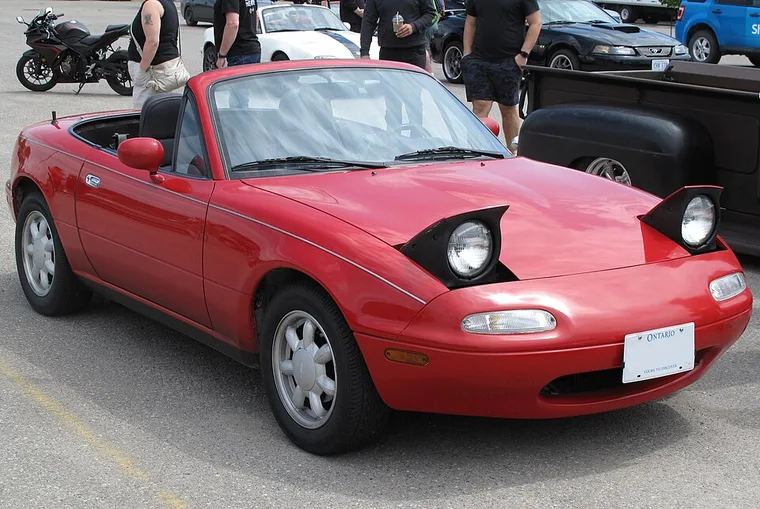 1989 Mazda MX-5 Miata (NA)
Nami
A tiny, balanced NA Miata roadster that rotates beautifully and bites just as fast — a momentum car you drive on line, not power.RWD front-enginelight ≈990 kgshort wheelbasebreakaway: fast50% front / 50% rear · oversteersWhy demanding- A 50/50 rear-driver — it rotates on both throttle and lift, so it bites on entry and exit alike.
- Very light (≈990 kg) and short — low inertia, it changes attitude the instant you move the wheel.
- Peaky and low on torque: win on momentum and line, and don't set it so loose it scrubs its exit drive.
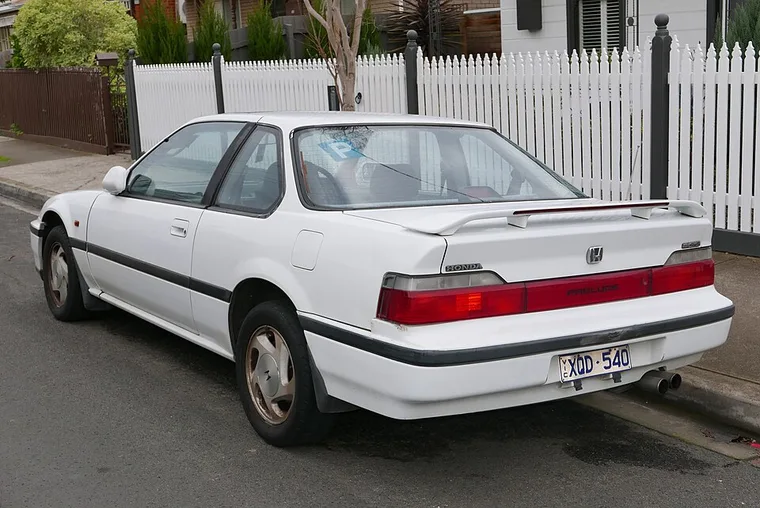 1991 Honda Prelude
Phaser
A nose-heavy front-drive sports coupe with a peaky, high-revving engine — a corner-carver that snaps its light rear over kerbs.FWDmid weight ≈1,250 kgbreakaway: fast62% front / 38% rear · understeersWhy neutral- Nose-heavy front-driver — understeer-limited under power, so rotate it on entry.
- A peaky, high-revving engine: gear it short and keep the revs up, it won't lug like a V8.
- The light FWD rear can snap over kerbs and jumps — add a touch of rear stability on rough tracks.
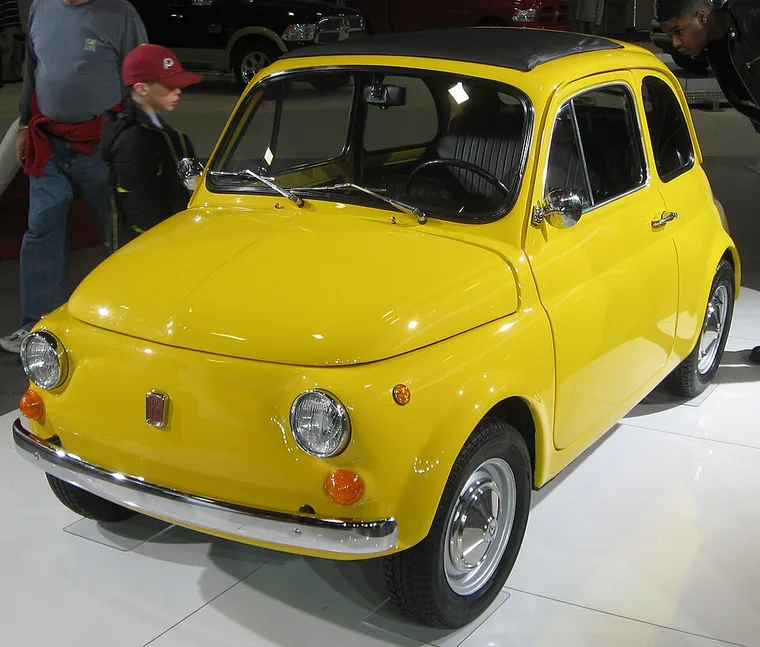 Fiat 500 / 600
Popper
A tiny rear-engine city car — a nimble technical-track toy that swings its tail wide the moment you lift off.RWD rear-enginelight ≈560 kgshort wheelbasebreakaway: sudden40% front / 60% rear · oversteersWhy demanding- A tiny rear-engine car — weight over the back axle gives it lift-off / pendulum oversteer.
- Featherweight and short-wheelbase — darty and quick to rotate, a technical-track toy.
- Torque-poor: gear it short and keep it in the powerband; hopeless on long straights.
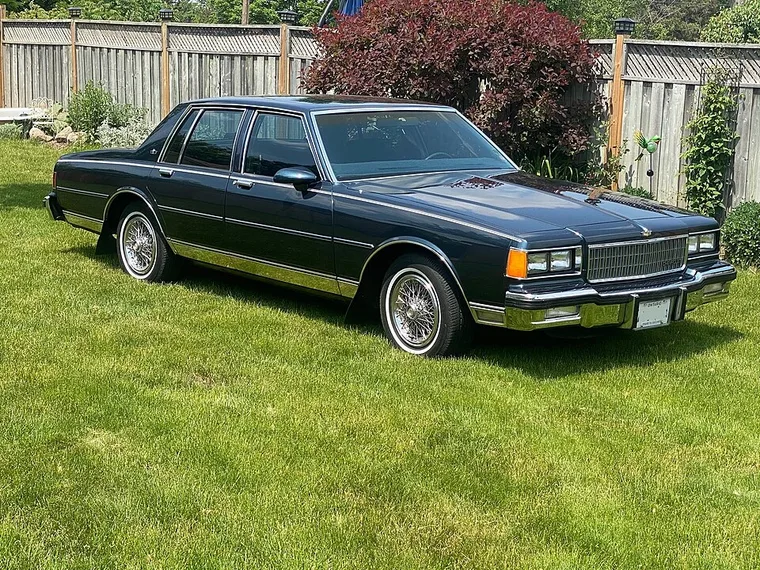 1986 Chevrolet Caprice
Rammer
A heavy, front-biased full-size sedan — a momentum rammer that understeers and changes direction lazily but survives contact.RWD front-engineheavy ≈1,633 kglong wheelbasebreakaway: progressive56% front / 44% rear · understeersWhy forgiving- Very heavy (≈1,633 kg) and front-biased — strong understeer and lazy direction changes.
- Enormous inertia means it changes attitude slowly; smooth, early braking beats trail-braking.
- Built as a momentum weapon — its mass and durability are the point, not agility.
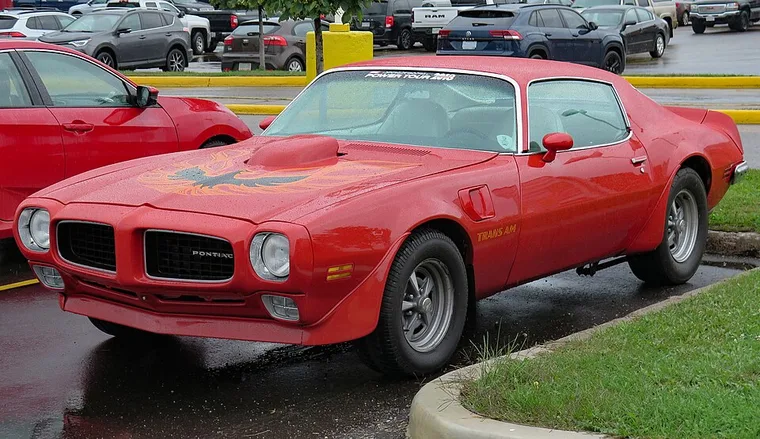 1973 Pontiac Firebird / Trans Am
RoadSlayer
The front-heavy V8 muscle car most players start with — stable and forgiving, but the torque will step the rear out if you ask too much.RWD front-engineheavy ≈1,750 kglong wheelbasebreakaway: progressive56% front / 44% rear · neutralWhy forgiving- Nose-heavy 56/44 — it understeers into a corner, the failure that just runs you wide instead of spinning.
- Heavy and long in the wheelbase — high inertia, so it changes attitude slowly and gives you time to react.
- The power-oversteer only shows up when you ask for it with throttle on the way out.
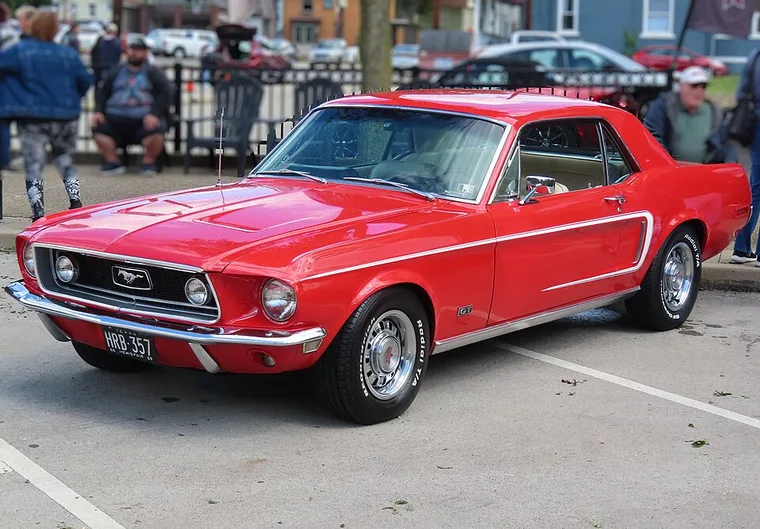 1968 Ford Mustang
Rocket
A lighter, well-balanced V8 pony car — the neutral all-rounder of the muscle group with only mild power oversteer.RWD front-enginemid weight ≈1,350 kgbreakaway: moderate55% front / 45% rear · neutralWhy neutral- Near-balanced 55/45 — neither end dominates, so it turns in cleanly without pushing or snapping.
- Only mild power-oversteer — the rear steps out when you provoke it, not on its own.
- The neutral all-rounder: small setup changes swing it either way, so tune it to taste.
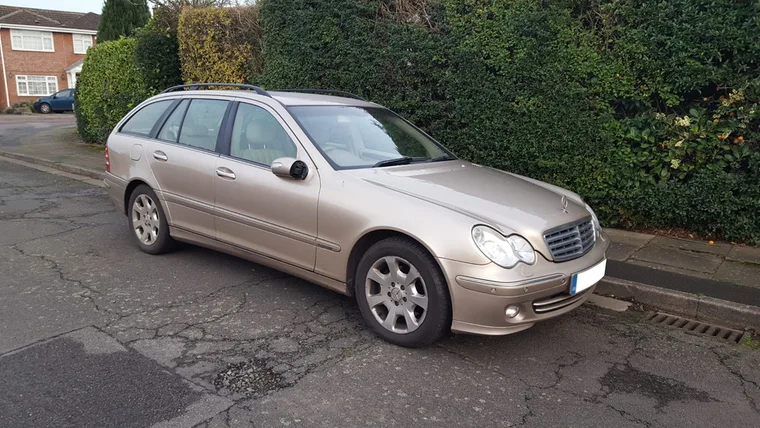 2001 Mercedes C-Class Estate (W203)
Stahlwagen
A long-wheelbase rear-drive estate — the stable, predictable one, with a slightly rearward balance that aids traction and controllable oversteer.RWD front-engineheavy ≈1,500 kglong wheelbasebreakaway: progressive53% front / 47% rear · neutralWhy forgiving- The stable one — a long-wheelbase wagon whose slightly rearward mass (53/47) actually aids rear traction.
- Predictable and controllable, even when the tail does move; it slides in slow motion.
- Torque-rich midrange — brake bias and diff tuning matter more here than on a nose-heavy car.
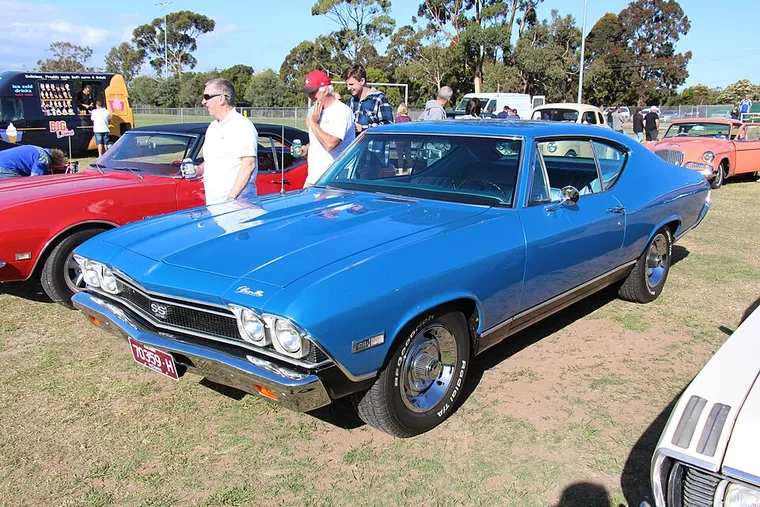 1968 Chevrolet Chevelle
Switchback
A front-biased V8 brawler built for straight-line speed — strong on fast tracks, but it understeers hard in tight corners.RWD front-engineheavy ≈1,700 kglong wheelbasebreakaway: progressive55% front / 45% rear · understeersWhy forgiving- A heavy straight-line brawler — strong on fast tracks, understeers in tight corners.
- Long and heavy, so slides build slowly and take distance to gather — steer it with the throttle.
- Set it up for high-speed sections and brake early into the technical bits.
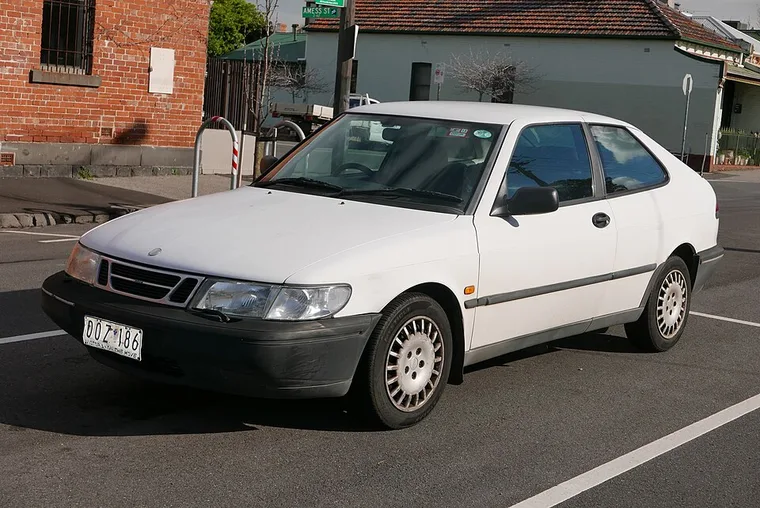 1997 Saab 900
Valken
A nose-heavy front-drive hatch with modest power that handles well — a momentum car you drive on line and corner speed, not muscle.FWDmid weight ≈1,300 kgbreakaway: moderate62% front / 38% rear · understeersWhy neutral- Nose-heavy front-driver with modest power — understeer-prone but it genuinely handles well.
- A momentum-driven all-rounder: tune for agility and cornering, not straight-line speed.
- Watch for launch wheelspin, and the light rear can get snappy if you overdrive it.
Car photography from Wikimedia Commons, showing the real-world cars each Wreckfest vehicle is based on — photographers and licences.